

Let me take you back to my days as a loss control representative.
I spent a lot of time auditing trucking companies, and I started noticing a pattern that drove me crazy. I’d walk into an office, sit down with the safety personnel, and everything would look great at first glance.
Their paperwork was immaculate. Driver Qualification files? Organized. Maintenance records? Up to date.
But as soon as I started digging into actual risk management, the cracks appeared.
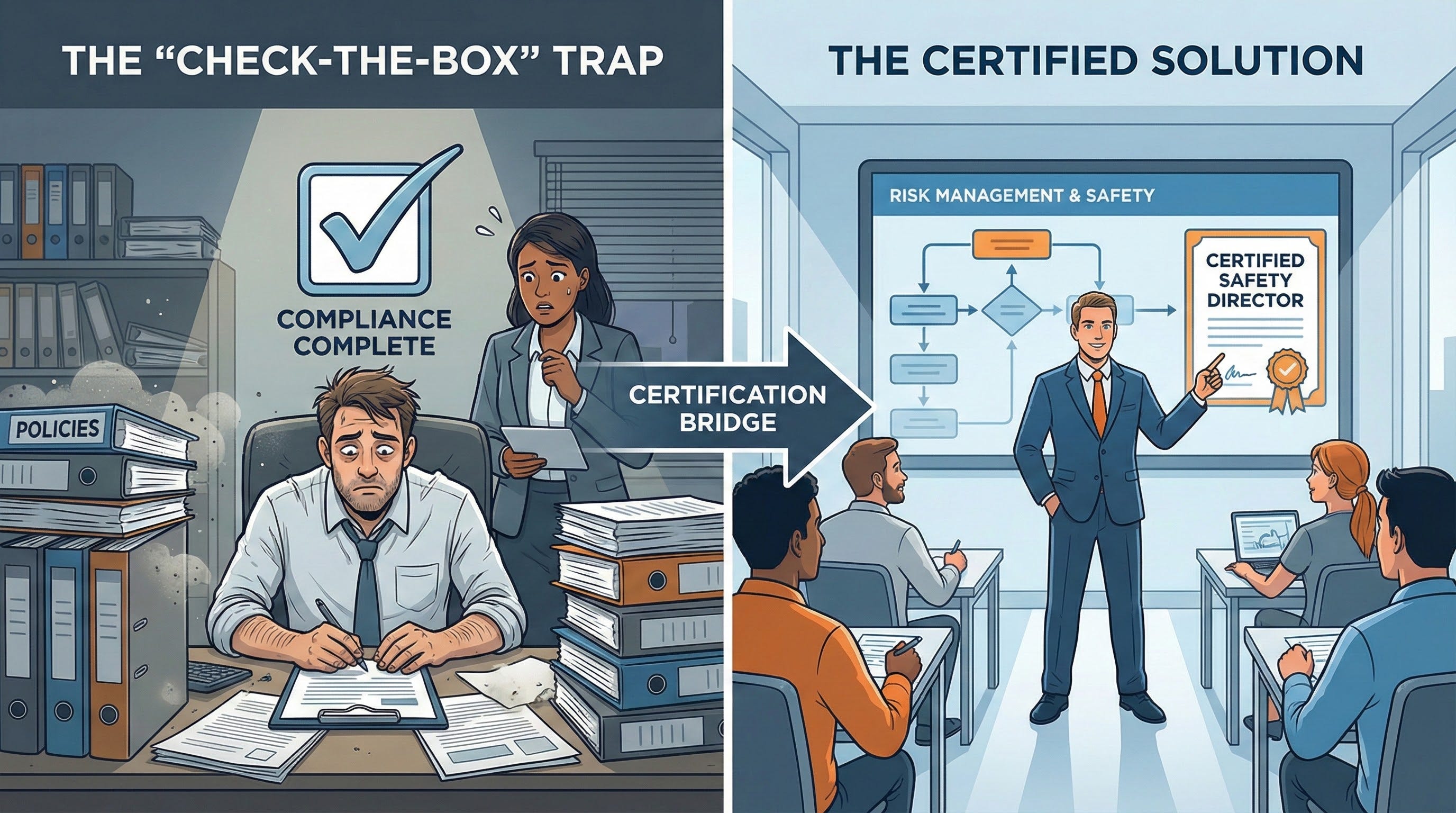
The industry has a massive training disconnect. Most safety directors learn through “on-the-job” training. They get really good at the Compliance side: keeping the government happy and the files straight. But they often miss the Safety side: analyzing risk, preventing accidents, and building a culture that actually keeps the truck upright.
They know what to file, but they don’t always know how to protect the business.
The “Insurance Application” Game
There is a dirty little secret in this industry regarding how insurance gets written, and it usually happens before a policy is even bound.
When a motor carrier applies for insurance, the application asks tough questions:
What experience does your safety personnel have?
What written safety policies do you have in place?
How do you train your drivers?
Here is the common practice I saw over and over again: The insurance agent, wanting to close the deal, fills out this section for the carrier. They check “Yes” on everything. They tell the underwriter, “Oh yeah, they have a robust safety program. They have a formal training curriculum. They’re solid.”
The coverage gets bound. Everyone is happy.
The 90-Day Reality Check
Then, about 60 to 90 days later, someone like me (the loss control rep) shows up to verify what was on that application.
I’d ask to see the written safety policies or the training curriculum that the agent promised existed. And you know what happened? They didn’t exist.
The motor carrier looks bad, the risk profile goes up, and the insurance company realizes they are exposed. This cycle is incredibly common, and it’s dangerous for your business.
Build a Solid Foundation
You cannot rely on your insurance agent to “gloss over” your safety gaps. You need to actually fill them.
This is why the Safety Director Certification course is non-negotiable. It bridges the gap between being a “paperwork filer” and a true “Risk Manager.” It gives safety directors the solid foundation they need to:
Actually build the programs the insurance application asks for.
Understand the difference between being compliant and being safe.
Survive that 90-day audit with flying colors.
Don’t wait for a loss control rep to tell you your safety program is hollow. Get the training, get the certification, and build a fleet that is actually as safe as your insurance application claims.
The “Loss Control Audit” Survival Checklist
5 Things I Looked For When I Walked Through Your Door
